The Yardbirds
Shapes of Things
The moment pop music starts to warp. Beck turns a compact single into a miniature sound experiment with feedback, sustain, and a solo that seems to arrive from the future.
Listen for That fuzz-soaked break at 1:35.
An introduction in five tracks
The guitarist who made the electric guitar whisper, laugh, and sound gloriously dangerous.
Drop the needle
The short version
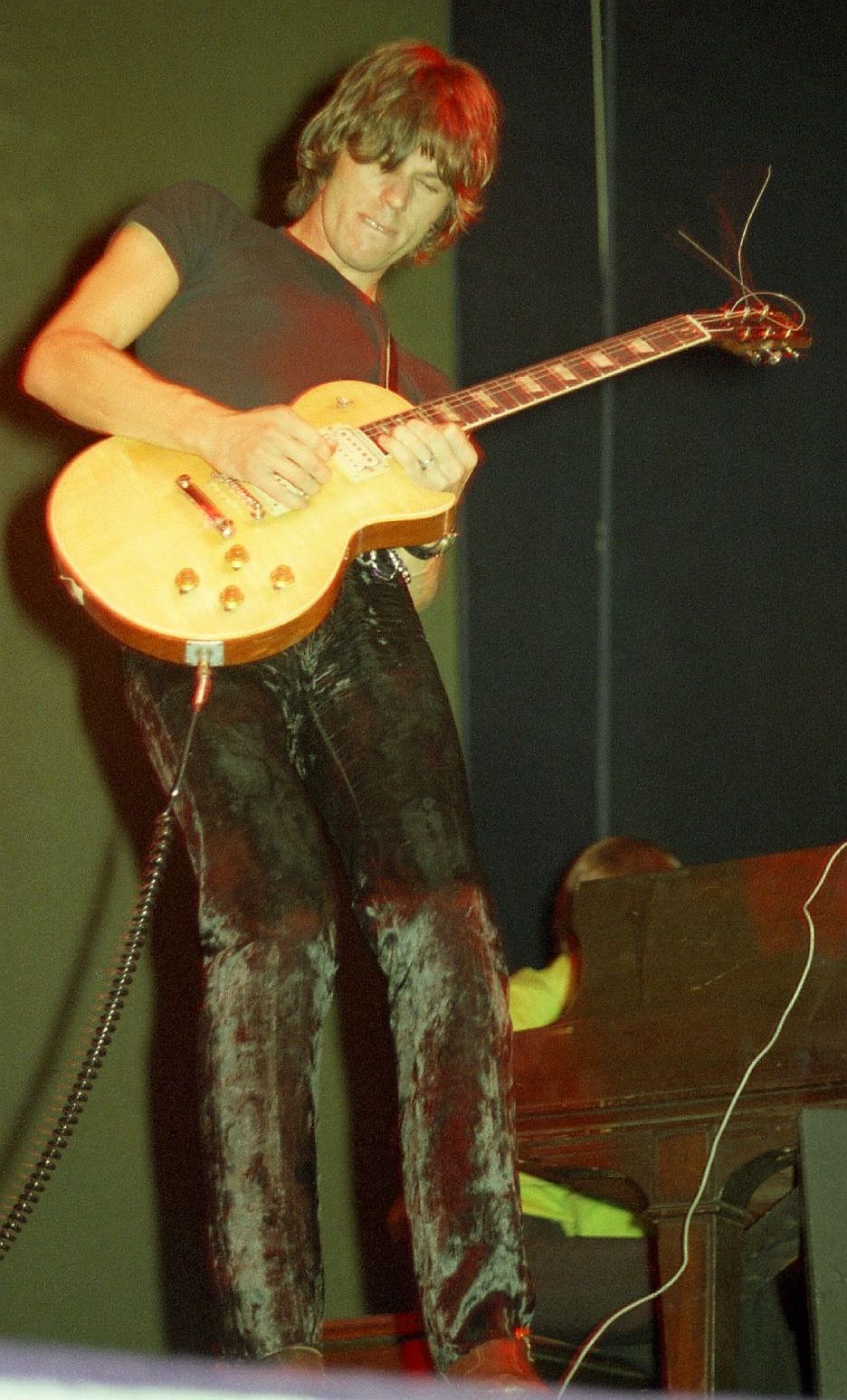
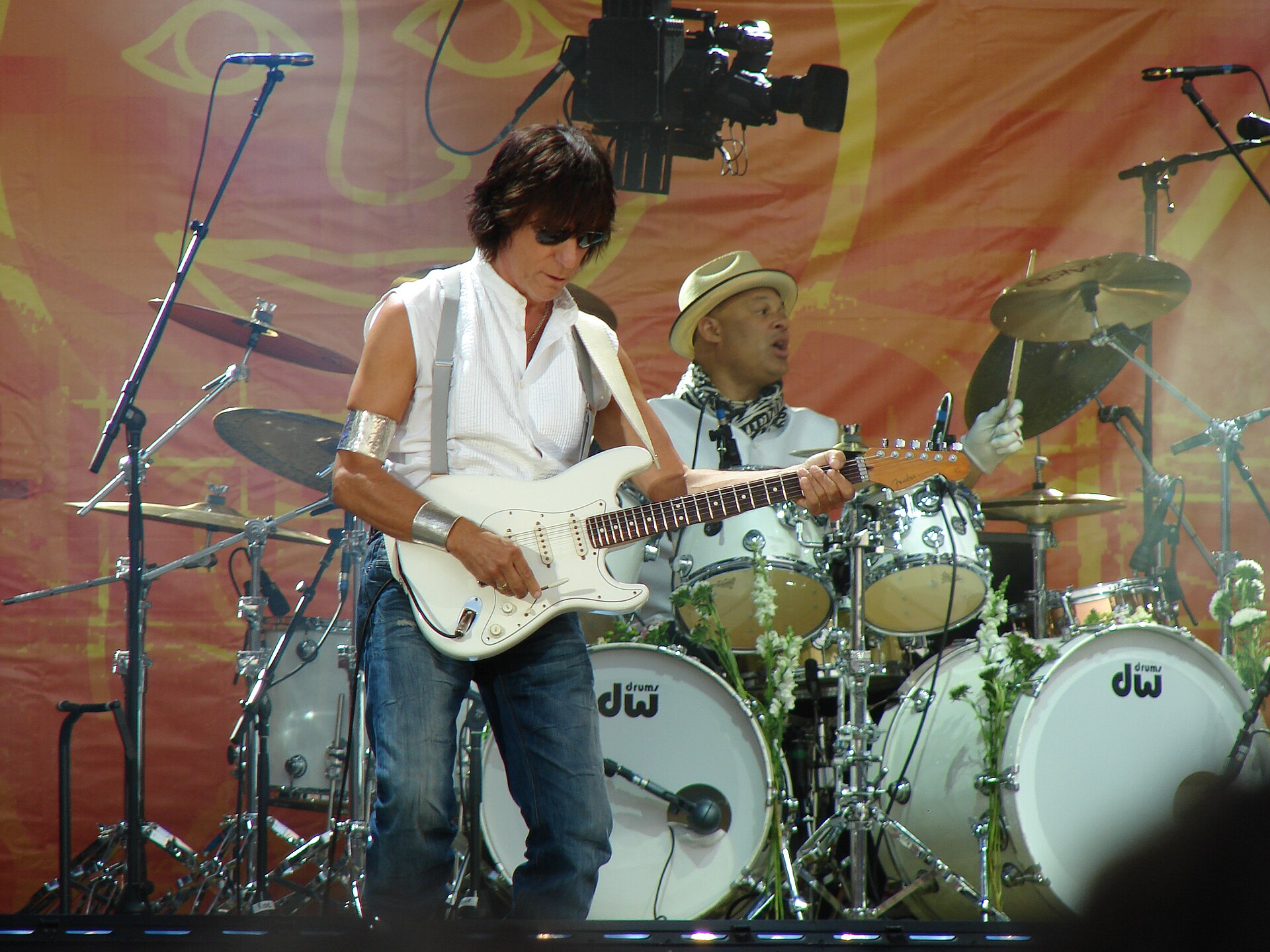
Jeff Beck’s career began in the blast furnace of 1960s British rock. With the Yardbirds, he turned feedback and fuzz from accidents into vocabulary. With the first Jeff Beck Group, he helped set the weight and swagger of hard rock before the genre had a name.
Then he kept moving. Jazz-fusion, funk, rockabilly, electronica, orchestral melody—each became material for his touch. He often played without a pick, shaping notes with his fingers, volume knob, and vibrato arm until the instrument seemed to breathe.
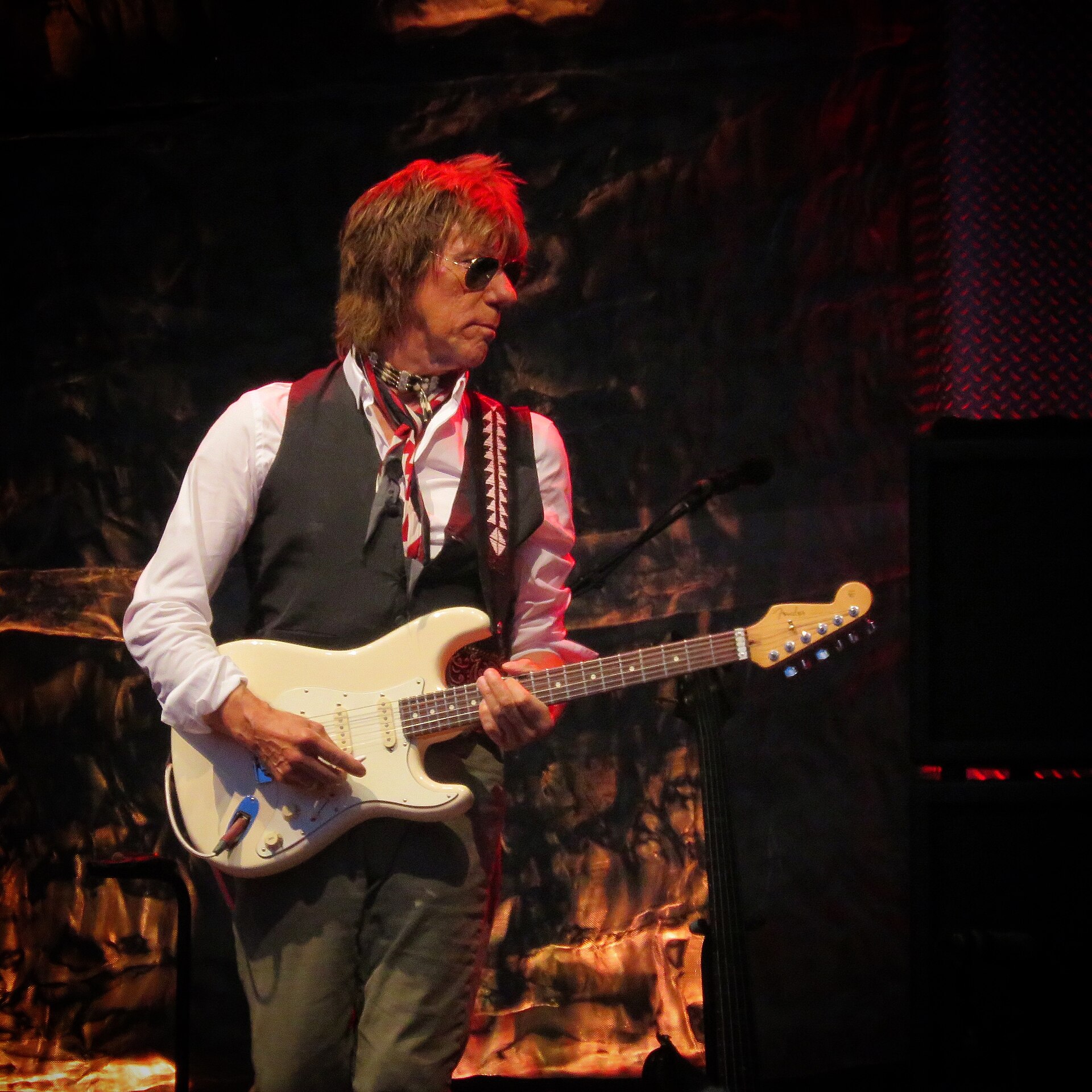
Not a straight line.
A live wire.

Five doors in
Don’t try to summarize Jeff Beck with one song. Follow the mutations.
The Yardbirds
The moment pop music starts to warp. Beck turns a compact single into a miniature sound experiment with feedback, sustain, and a solo that seems to arrive from the future.
Listen for That fuzz-soaked break at 1:35.
Jeff Beck
Part procession, part detonation. Recorded with Jimmy Page, John Paul Jones, Nicky Hopkins, and Keith Moon, it is a two-and-a-half-minute blueprint for heavy rock.
Listen for The hard left turn after the drum scream.
Blow by Blow
A Stevie Wonder composition becomes a wordless vocal performance. Every bend, pause, and swell carries the ache that a singer might put into a lyric.
Listen for How silence does as much work as speed.
Jeff Beck’s Guitar Shop
Volume knob and vibrato arm replace the normal rules of fretting. Notes hover, dip, and cry with an almost impossible delicacy.
Listen for Pitch controlled like a human voice.
You Had It Coming
Beck translates Nitin Sawhney’s melody into a shimmering conversation between guitar and electronics—proof that reinvention was his natural state.
Listen for The slide phrases that never quite touch earth.
How to hear him
He frequently abandoned the pick. Thumb and fingers gave each attack a different grain—from glassy to percussive.
His vibrato arm was not an effect; it was phrasing. Notes slipped between fixed pitches like a singer leaning into a syllable.
The flash never obscured the song. Beck’s pauses, held tones, and restraint made the next sound land harder.
A restless life
Swipe or scroll to follow the signal.
1944
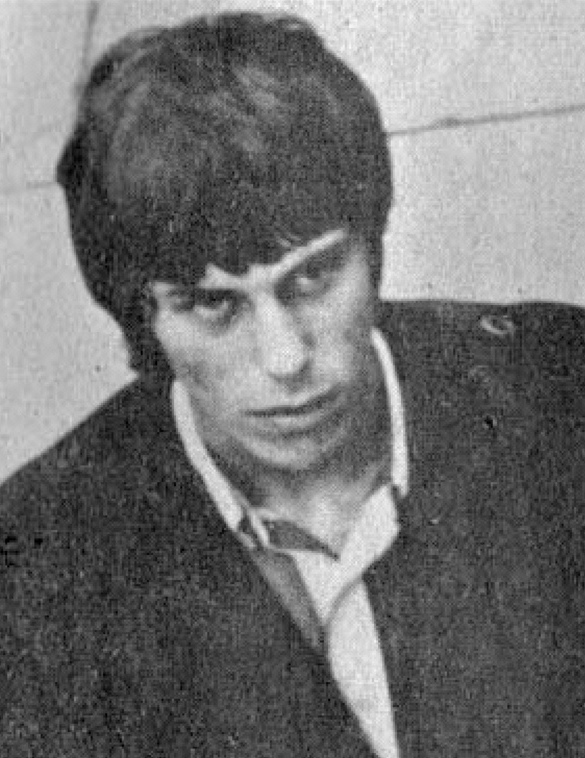
Geoffrey Arnold Beck grows up in Surrey, building his own guitar as a teenager and absorbing Les Paul, Gene Vincent, and the blues.
1965
He replaces Eric Clapton and pushes the group toward distortion, feedback, Indian-influenced melody, and psychedelic pop.
1967
With Rod Stewart, Ronnie Wood, and Nicky Hopkins, Beck makes Truth—a loud, loose collision of blues and hard rock.
1975
Produced by George Martin, the all-instrumental album brings lyrical guitar and jazz-fusion to a mass rock audience.
1989
A stripped-back trio with Terry Bozzio and Tony Hymas reveals a new language built from harmonics, touch, and the vibrato arm.
2009
Already inducted with the Yardbirds in 1992, Beck enters the Rock & Roll Hall of Fame as a solo artist, introduced by Jimmy Page.
2023
Beck dies on January 10 at 78. His influence lives in every guitarist who treats sound itself—not speed—as the destination.

The thread through it all
Beck never built a brand around repeating himself. He followed whatever sound felt just out of reach—and made generations of players want to reach for it too.
Visit the official archive